Multifunctional green roof technology protecting buildings and the environment
Breaking down the rainbow of sustainable roofing options and how they benefit cities
Did you know that smart roofs are one of the best tools we have against climate change?
It’s true – cumulatively, advancements in roofing technology are helping Canadian municipalities control atmospheric temperature, manage rainwater to avoid flooding, lower electrical use and carbon emissions, and even provide urban agrarian spaces for growing food.
All of this occurs while still performing basic roofing functions – protecting structures and building users from the elements and intensifying weather patterns.
Welcome to the era of multifunctional roofing systems, where these secondary uses are quickly shifting from experimental trends to industry standards.
From green roofs and cool roofs to blue roofs and hybrid assemblies, these systems are becoming increasingly common on commercial, institutional and multi-residential projects across the country.
Identifying multifunctional roofing systems
Let’s break down the types of multifunctional roofing systems and their uses.
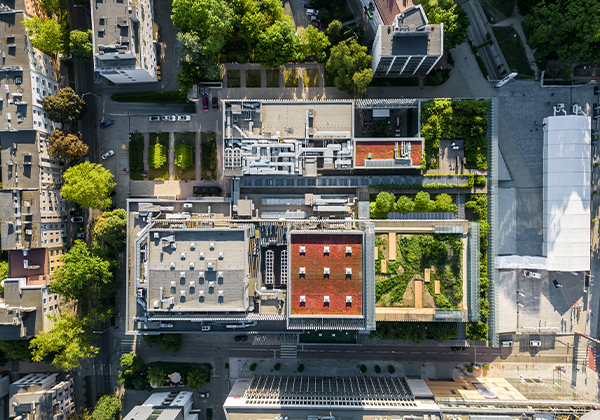
Green roofs are the workhorses of environmentally friendly roofing systems, most commonly found in urban regions, with little access to productive green spaces. They incorporate vegetation and engineered growing mediums directly into the roof assembly, giving city dwellers space to run their own roof-top farming operations.
En masse, green roofs help combat the “urban heat island” effect, a phenomenon that causes cities to have higher temperatures than their suburban and urban neighbours. Concrete, asphalt and glass – common materials in urban infrastructure – don’t absorb heat but reflect it, causing an intensive warming effect. Adding more vegetation to a city skyline helps absorb those reflections, creating an overall cooling effect.
Cool roofs are another popular option, particularly on large commercial and industrial buildings. These systems use reflective roofing materials to reduce solar heat absorption during warmer months.
This leads to lower rooftop temperatures, reduced cooling demands and improved energy efficiency during hot Canadian summers.
Green roofs can also absorb rainwater, much like dedicated blue roof systems engineered specifically for stormwater management. When it rains, rooftop systems capture the water, alleviating pressure on municipal water management infrastructure. Some buildings are even designed to channel runoff into underground stormwater management and drainage systems.
Blue roofs provide an invaluable solution for Canadian regions facing increasing risks of flooding from severe weather events.
Practical, sustainable, multifunctional roofing options
We’ve been discussing smart roofs and their positive impacts on a macro scale, but they also stand to benefit individual asset owners and operators.
The rainbow of sustainable roofing options can deliver long-term building performance and operational savings. They enable decision makers to reach their ESG commitments and achieve green building certifications that can enhance marketability.
Operationally, green roofs contribute to lower heating and cooling costs, extend the lifespan of roofing assemblies by protecting membranes from UV exposure and temperature fluctuations and support more resilient building design overall.
As Canada’s construction and commercial real estate industries increasingly embrace and prioritize climate resilience and smarter building practices, multifunctional roofing systems stand to become essential.
Modern roofs are active contributors that enhance how a building performs for decades to come – in more ways than one.