What Type of Roofing System is Best for my Commercial Building?
Take these elements into consideration before selecting a roofing system
Choosing the right roofing system for your commercial building can be a challenge, but the load becomes a little lighter when you design with performance expectations in mind.
During the roof design process, contractors can help building owners evaluate and narrow their options by reviewing how different roof designs perform, materials they call for, and lifecycle costs.
They will consider questions like:
- How will the roof look with the existing building?
- What is the local climate?
- What materials are the most durable and long-lasting in those conditions?
This approach can help owners realistically pre-determine their roof’s life expectancy, foresee potential maintenance issues, and budget for future repair costs.
Let’s take a closer look at some of the considerations to review before choosing your commercial roofing system.
How roof style informs your commercial roof’s materials
The design of a commercial roof plays a key role in determining which materials are most appropriate.
Flat and low-slope roofs
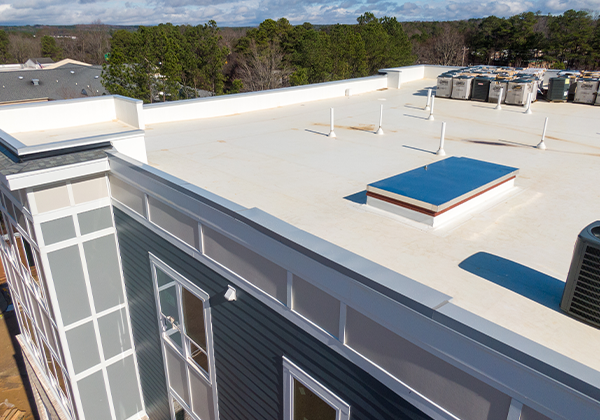
When you think of a commercial roof, you probably picture flat and low-slope roofs. That’s because they are the most common roof system for commercial and industrial buildings, as they can support rooftop equipment, allow for efficient drainage systems, and tend to be the most cost-effective for these larger roofs.
These systems are typically constructed using built-up roofing, modified bitumen, or single-ply membrane systems.
Built-up roofing systems use multiple layers of asphalt or tar, combined with reinforcing fabrics and a gravel surface, to form a durable waterproofing system.
Modified bitumen roofing enhances traditional asphalt roofing with polymers that improve flexibility and resistance to cracking in cold Canadian climates.
Single-ply membrane systems including TPO, PVC and EPDM, are popular because of their combination of strong performance and energy efficiency. TPO membranes have reflective properties that reduce cooling demands, aligning with Natural Resources Canada’s energy-efficiency guidance for commercial buildings.
PVC membranes are resistant to punctures and chemical leaks, making them well-suited for more intensive building operations like restaurants and industrial facilities.
Likewise, EPDM membranes are known for their low cost, low maintenance and ability to remain flexible in both hot and cold conditions. This makes them a fantastic material for general use, though they may be more sensitive to punctures in areas that may need to be accessed frequently.
Steep-slope roofing systems
Steep-slope roofing systems are commonly used on smaller commercial buildings and mixed-use developments, adding curb appeal and interesting architectural elements to a roof’s design.
Some sloped roofs are made with metal roofing systems crafted from steel, aluminum, or copper. These provide excellent durability, fire resistance and performance under heavy snow loads and other extreme weather events. They may cost more upfront, but will last longer than asphalt shingles, often used for their lower upfront cost.
Specialty roofing systems
Nowadays, many commercial buildings are exploring specialty roofing solutions to meet sustainability, stormwater management and urban planning goals. This is particularly true where municipalities are prioritizing climate resilience and environmental performance.
Natural material roofs are made with low-processed resources that come from the earth, like slate, clay and cedar. Green roofs can help cool local urban climates, filter rainwater and add people-friendly spaces to rooftops with vegetation. Blue roofs specifically target water storage in regions affected by flooding surface water pooling.
These roofing systems are not suitable for every commercial building. They come with expensive upfront and maintenance costs but are an option that can add value through their utility and aesthetic appeal.
Identify priorities to pick your perfect commercial roof
At the end of the day, choosing the right commercial roofing system for your building comes down to identifying your priorities.
- Do you want to spend more on upfront costs or long-term maintenance?
- Is there value in having eye-catching architectural elements on your roof, or will a simple, utilitarian flat roof suffice?
- Where is your building situated, and what materials will withstand local weather patterns the longest?
- What kind of long-term maintenance can you budget for?
Building owners must balance these decisions when choosing their commercial roofing system, but they don’t have to go it alone. Expert contractors and building designers are prepared to help guide them to the right solution that protects their property for decades to come.