The Lungs of the Home: Why Proper Ventilation Is as Important as Shingles in a Roof
A roof’s ventilation helps to control interior comfort while extending the life of the building
An effective roof balances visible protection with hidden airflow, meaning that ventilation and shingles have equally important roles to play.
If the home was a body, the shingles of a roof would be the skin – layers of barriers that protect what’s inside, seal to keep unwanted elements out, and regulate internal systems. Following that line of thinking, you can consider ventilation as the lungs of the home. It regulates airflow, balances moisture and protects your house from the inside out. Proper ventilation can also make all the difference in establishing an enjoyable, cozy interior environment in your home. A well-ventilated roofing system includes some variation of the following three key elements: Together, they work to create a continuous flow of air through the attic space or highest point in a home. Without it this trifecta, even the highest-quality roofs can deteriorate faster than necessary, requiring costly repairs. Depending on where you are in Canada, your climate may range from the arid dryness of the desert to the damp, heavy air of the rainforest. It’s one of the things that makes our country special, but without proper ventilation, these extremes can creep indoors and negatively impact your building, your sense of comfort, and even your health. Excess moisture can build up in the attic and lead to mould, mildew and wood rot, along with respiratory issues. On the flip side, too little moisture can dry out wood structures and cause cracking. Well-balanced ventilation helps to maintain an equilibrium of humidity in your home. As air moves throughout a building, especially through any upper floors, the roof’s ventilation system helps to filter it, reducing the buildup of indoor pollutants, allergens and stale air. This circulation is especially important in homes built and renovated with today’s tight, energy-efficient construction, where thermal leakage tends to stagnate natural airflow. Proper airflow can also play a big role in lowering your utility bills. In the summer, ventilation helps to release hot air, reducing strain on air conditioning systems and allowing it to work more effectively. In the winter, it prevents warm indoor air from creating condensation on cold surfaces, which can cause ice dams and water damage.
Both scenarios can drive up energy costs if left unchecked, but a well-ventilated roof system can keep your home at a stable temperature and lower energy consumption, all while protecting your wallet. It’s easy to see why shingles get all the attention: they’re more visible, tangible and central to a roof’s identity. Proper ventilation may not be as showy, but without it, shingles, decking and insulation – even structural elements – can become damaged over time and age prematurely. Ultimately, these essential roofing elements need to work together to protect both your indoor comfort and your property investment.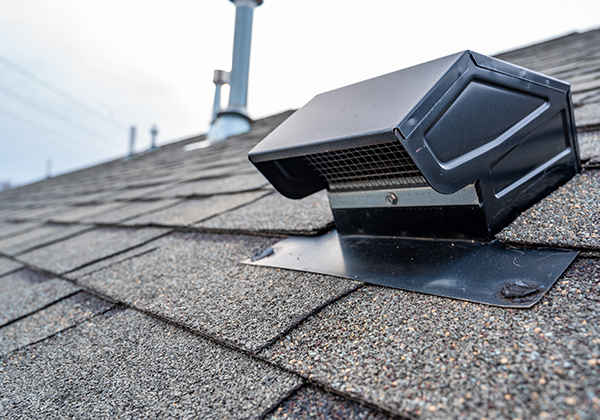
How does ventilation interact with roofing systems?
Achieving the perfect moisture balance
Assisting air filtration
Ensuring energy efficiency
Proper ventilation and shingles: More than meets the eye